What is Foil Stamping? A Guide to Metallic Wedding Invitations
Gold foil, copper, rose gold: here’s how to get that shiny, luxe finish on your wedding suite
If you’ve been researching wedding invitations for any length of time, chances are you’ve come across a photo that stopped you in your tracks: crisp cotton paper, perfectly pressed typography, and a shimmer of gold foil that practically glows. You may not know exactly how it’s printed or what makes it different from letterpress, but you know one thing for sure:
You want that for your custom wedding invitations.
Today, I’m breaking down the basics of foil stamping so you can understand how it works, what makes it special, and how to incorporate it into your suite.
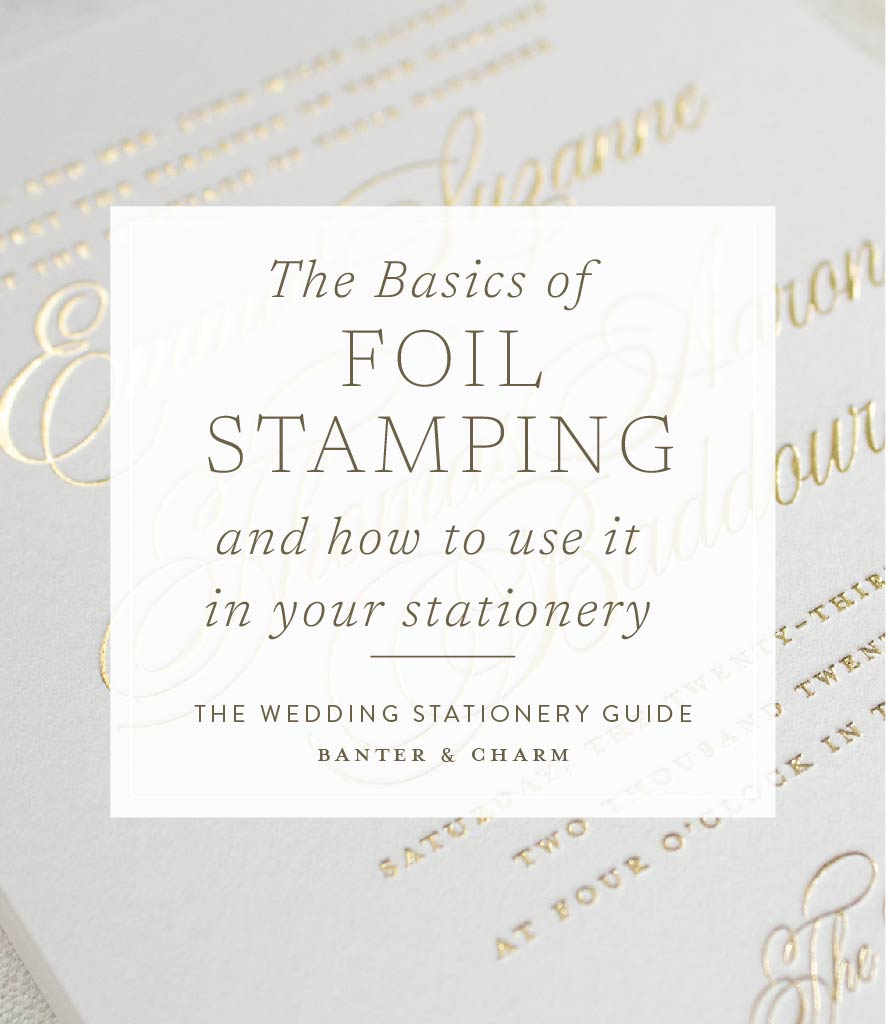
Foil Stamped Invitations 101
Also known as hot foil or foil pressed
Foil stamping (also called hot foil stamping, foil press, or simply foiling) is a luxury printing process that’s been used for over a century. It’s most commonly seen on book covers, high-end packaging, and more recently, on wedding invitations that make know how to make an entrance.
At Banter & Charm, foil stamping is one of the most requested upgrades, especially for formal invitations and save the date cards that need a touch of sparkle or shine.
It adds:
Glamour to minimalist, typographic layouts
Old Hollywood charm to Art Deco-inspired designs
A glowing finish to monograms, names, or venue illustrations
True metallic shine—something flat printing simply can’t replicate
Gold foil wedding invitations are by far the most popular, but I also offer silver, rose gold, and copper—and other colors like white, red, or pink foil are available by request.

How Foil Stamping Works
Think of it like letterpress, but with shine
Foil stamping is similar to letterpress in that it uses pressure to press a design into the paper—but instead of ink, it uses sheets of ultra-thin metallic foil.
Here’s a quick overview of the process:
Your custom design is turned into a metal plate (called a die), made from magnesium or copper.
The plate is heated, and metallic foil is placed between the plate and the paper.
Each sheet is hand-fed into the press, the heated plate applies pressure, sealing the foil into the surface of the paper.

A separate plate is needed for each foil color used, and foil is always stamped after any flat or letterpress printing.
This means you can:
Print ink first, then foil on top
Combine foil with blind letterpress for extra texture
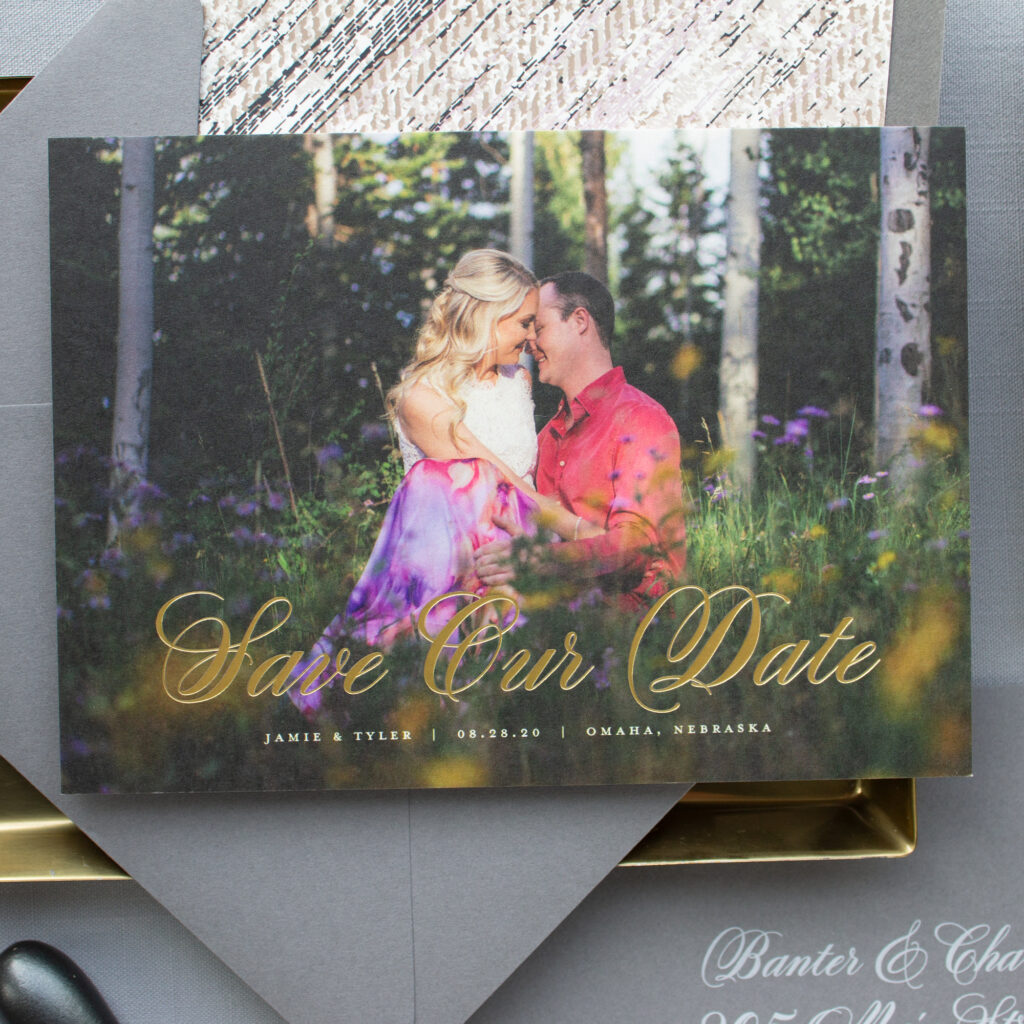
Foil is shiny and opaque as opposed to letterpress inks that are slightly transparent. This means it can be printed on dark papers with no show through. You can also foil stamp on top of a flat print photograph – this makes for a stunning save the date!

Why Foil Stamping Costs More
And why foil stamping is worth it if you want real metallic shine
Foil stamping is the most labor-intensive printing process I offer, which means it’s also the most expensive. The higher price point comes from:
Custom metal plate production
Additional press time
More complex setup and testing to get everything aligned just right
But here’s the thing:
Foil stamping is the only way to get that true, shiny metallic finish. There’s no digital shortcut. No ink that compares. If you want your names to glow in gold or your monogram to shimmer in rose gold, foil is the way to go.

What Can Be Foil Stamped?
Foil works beautifully on:
Wedding invitations
Reply cards and insert cards
Save the dates
Envelopes and liners
Day-of stationery (like matchboxes or cocktail napkins)
It’s best suited for minimalist designs, especially with bold type, line art, or small graphic elements. Large areas of foil or fine-line artwork may not transfer cleanly, but I’ll help you decide what works best for your layout.

Just like letterpress printing, foil stamping needs to be seen in person to be truly appreciated! Head over to the shop and order a sample foil wedding invitation so you can see the shiny gold, silver, rose gold, or copper foil in person!
Want to talk it through instead? I’d love to help.
Looking for details about the other printing styles offered at Banter & Charm? Check out the Printing Primer series on the blog!

tell me about your wedding
Every suite starts with a conversation about your wedding: your venue, your style, and the details that make it yours. You don’t need a fully formed vision. That’s what I’m here for.


