Wedding Invitations with Textured Details: What Is Blind Letterpress?
The soft, sculpted impression you can feel on wedding invitations, but barely see
If you’ve been scrolling Pinterest or flipping through invitation samples and wondering:
“What’s that gorgeous textured design pressed into the paper?”
“How do they get that embossed look on the invitations?”
“How is it showing up without any ink?”
You’re not alone. That subtle, sculpted look is called blind letterpress (also referred to as “blind deboss” or “embossing”) and while the name isn’t exactly romantic, the effect absolutely is.
It’s one of my favorite ways to add texture, dimension, and elegance to a wedding invitation without introducing extra color. Think of it as a tone-on-tone detail your guests will run their fingers over the second they open the envelope.
Let’s walk through what it is, how it’s made, and why it’s a favorite among brides who want something simple-but-significant.

What is blind letterpress?
The secret behind textured wedding invitations (without adding color)
Blind letterpress (sometimes called a blind impression or blind deboss) is a printing technique that uses no ink at all. Instead, a custom plate is pressed directly into thick, cotton paper using a vintage printing press—leaving behind a tactile impression that you can see and feel.
The result? A soft, sculptural design that feels elevated and timeless. It’s especially beautiful in white-on-white wedding invitations, floral invitation designs, or minimalist suites that focus on texture over color.
This technique is ideal for:
Pressed floral patterns
Decorative borders or dotted frames
Venue illustrations
Custom monograms or crests
Tonal background designs that don’t compete with your wording

Before we go any further, let’s clear this up
Is blind letterpress the same as embossing or sculpted emboss?
Not quite, but it’s easy to confuse them! Blind letterpress and embossing both create a texture on your invitations, but they work in opposite directions.
- Blind letterpress presses down into the paper using an un-inked plate, creating a recessed impression.
- Embossing pushes the design up from the paper surface using two custom metal dies (a die and a counter-die).
- Sculpted embossing adds even more dimension by using a hand-carved die for a true 3D look—think monograms or florals with highlights and shadows.
Sculpted embossing has become very popular lately, and it’s easy to see why: it’s absolutely stunning. That said, it does require two custom metal dies and more production time, which makes it a premium upgrade.
✨ Yes, I do offer embossing and sculpted emboss as specialty upgrades! They’re both gorgeous but do come with a higher price point due to the cost of custom metal dies and additional production time. If you’re curious about adding that level of detail to your suite, I’m happy to talk through the options!
But for today’s post, we’re focusing on blind letterpress, which offers a similar level of texture and sophistication, with a bit more flexibility in both budget and design.

How to use blind letterpress in your stationery
Examples of Wedding Invitations with Textured Designs
You may have spotted blind letterpress in those crisp, white-on-white wedding invitations with a barely-there floral pattern. Or maybe in a classic invitation suite with a soft border that looks like it’s part of the paper itself.
At Banter & Charm, I love using blind letterpress to elevate a design without overpowering it. A few favorite examples from the collection:
Veranda features delicate rose motifs pressed into the paper using blind letterpress (no ink, just texture). It’s soft and romantic, and the perfect way to add floral details without introducing more color.
Terrace pairs a blind-pressed florals framing formal typography for a clean, tailored look that still feels elevated and special.
Porter uses a baroque-inspired frame pressed into thick cotton paper to add visual interest and depth—making even a simple layout feel stately and dimensional.
Blind letterpress is also a beautiful way to incorporate custom venue illustrations, crests, or decorative borders as background elements. You can use it on just one piece (like a reception card or rehearsal insert) or carry it across the full suite for a layered, tonal look that feels refined and intentional.

Blind Letterpress basics
How To Get Blind Press (And Why It Counts as a Printing Color)
Even though no ink is used, blind letterpress follows the same careful, hands-on process as traditional letterpress printing:
Your design is created digitally, using the typefaces, layout, and artwork you’ve selected.
A custom plate or die is made for the blind-pressed elements.
Each piece of paper is hand-fed through a vintage press, where the plate is pressed into the surface with significant pressure—leaving behind a crisp, sculpted impression.
Since blind letterpress requires its own plate and a separate run through the press, it’s treated as a color for pricing purposes, just like any inked pass. So if you choose a suite with navy text and a blind floral border, that’s considered a two-color print job.
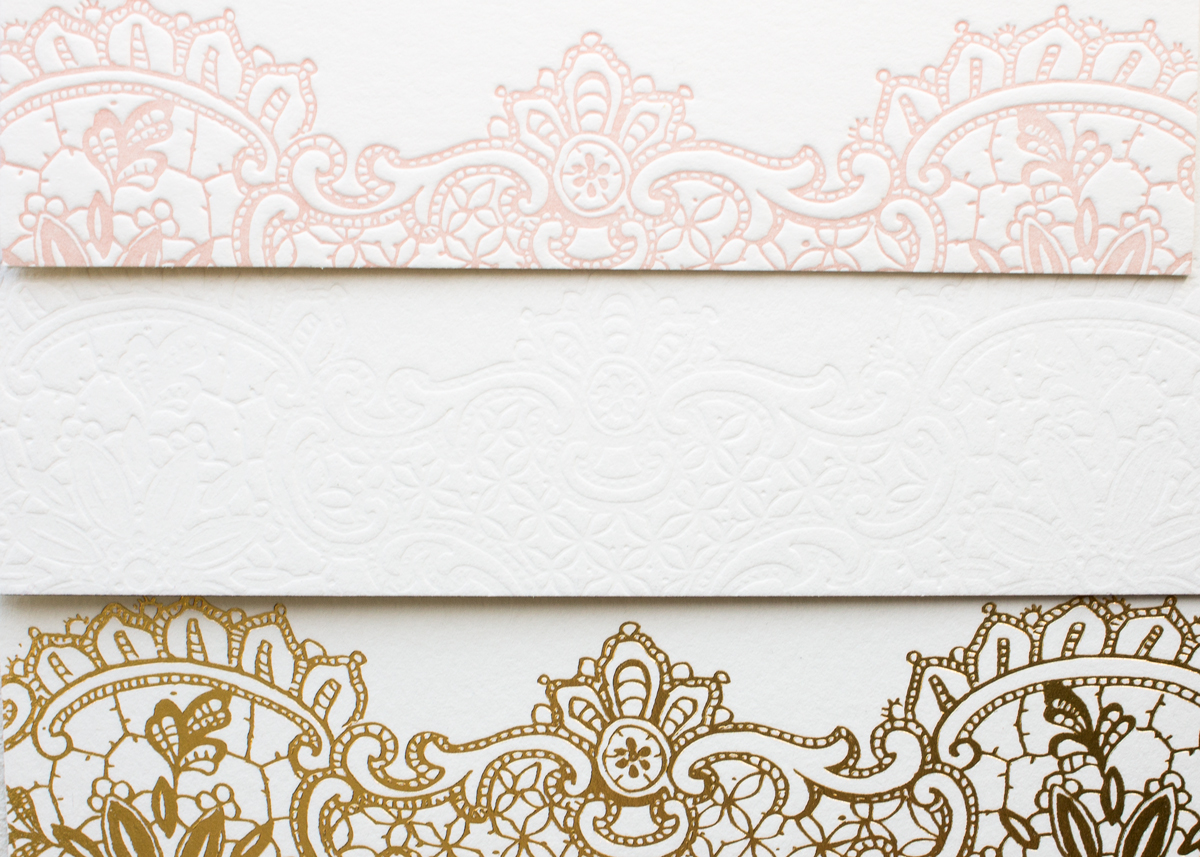
The image below shows the same lace detail in pink letterpress (top), blind letterpress (middle), and gold foil (bottom). The design and production process is the same for the pink letterpress and blind letterpress – you just skip the ink when you “print” blind letterpress. It’s like what happens when you’re righting with a pen that has run out of ink. You can keep writing and you will see indentations in the paper where you’ve pressed the pen down, but there will be no color.
Adding interest without color
Why Brides Love Blind Letterpress
Blind letterpress is for the bride who wants something different, but subtle. It adds interest and depth without overwhelming your design or introducing more color. It’s elegant. It’s classic. And it works for nearly every style:from traditional ballroom weddings to modern garden celebrations.
You’ll love blind letterpress if:
You want texture without too much color
You’re drawn to white or neutral-toned invitations
You love details that guests can see and feel
You want a suite that’s simple but special
Letterpress is meant to be touched, so start by ordering a sample box. You’ll get to see and feel a variety of designs, paper types, and embellishments in person, and that usually makes the decision making process easier. Want to talk it through instead? I’d love to help.
Looking for details about the other printing styles offered at Banter & Charm? Check out the Printing Primer series on the blog!

request a quote
For pricing and to get started, schedule a free consultation.
Let’s transform your wedding invitation vision into a tangible, beautiful reality.
Ready to begin?
See some of this pretty paper in person with a sample pack.


